Tatyana Zeltser’s Portfolio
Meet Runway My Way Chatbot Rose
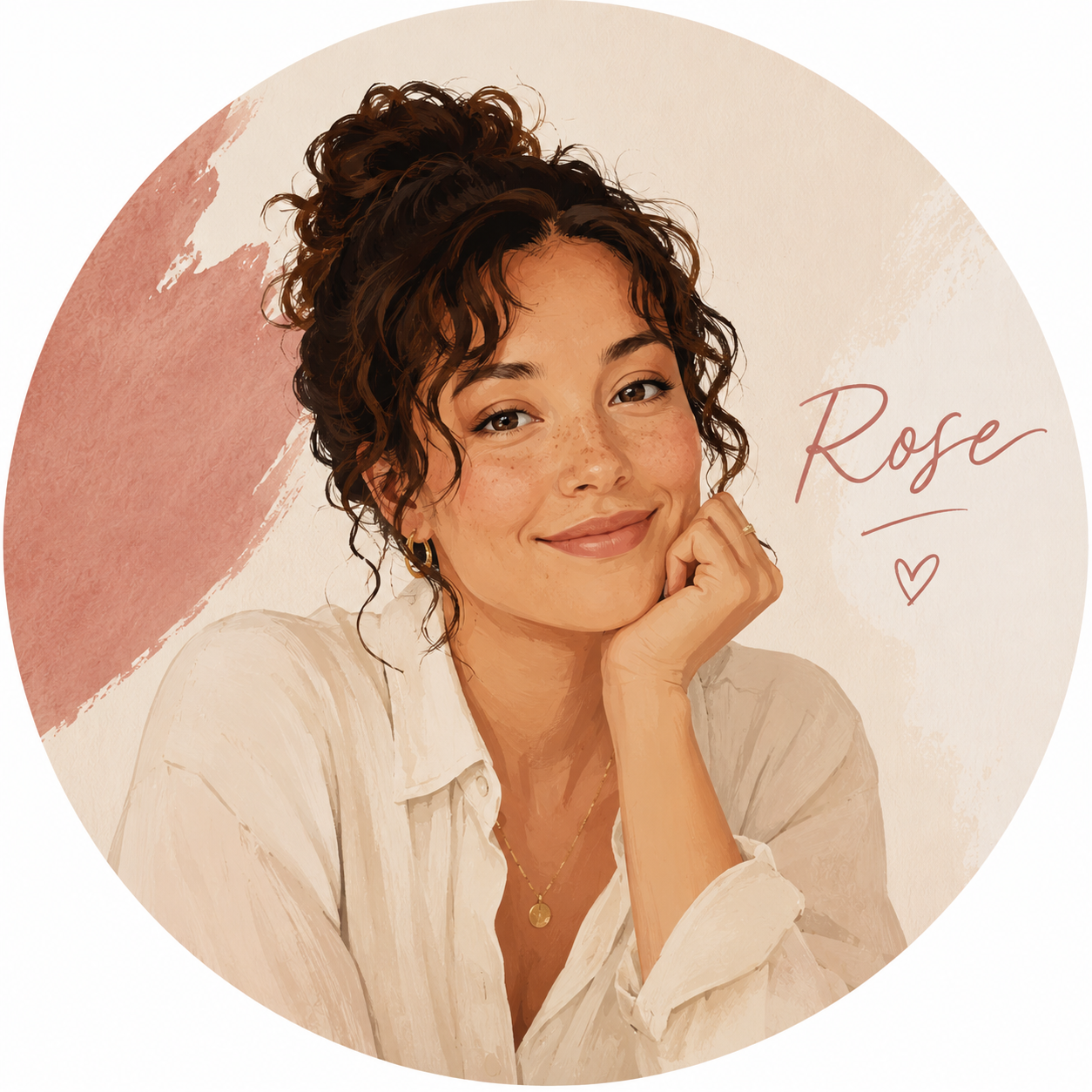
Try Rose live: Open the chat icon in the lower-right corner to explore the guided menu or ask a question in your own words.
Chatbot Goal
Rose was designed to help new and returning Runway My Way visitors quickly understand the project, discover topics they may not know to ask about, and find ways to participate, collaborate, or explore past shows. A two-level menu supports guided discovery, while free-text input remains available throughout the conversation so users can ask questions naturally and return to the main menu at any time.
A key goal was to balance informative responses with fast performance. I tested the available Voiceflow LLM models and selected the one that delivered useful, engaging answers while keeping latency low enough for the conversation to feel natural. Rose’s warm, enthusiastic personality and varied follow-up questions were designed to encourage continued exploration while keeping the conversation focused on Runway My Way.
My role: Conversation Designer, Conversational UX/UI Designer, and AI Agent Developer
Platform: Voiceflow
LLM Model: Claude 4.5 - Haiku
Experience model: Two-level guided navigation + free-text conversation
Status: Live on RunwayMyWay.org
Primary outcomes: Project discovery, content exploration, participation and collaboration inquiries
Rationale for Hybrid Design
The experience follows four core design principles:
Discoverability: Two-level menus reveal topics and opportunities visitors may not know to ask about.
Flexibility: Free-text input remains available throughout the conversation.
Orientation: Rose preserves the visitor’s current menu context so they can continue where they left off.
Control: A persistent Back to Main Menu option lets visitors change direction at any time.
A purely open-ended chatbot can leave first-time visitors unsure what to ask, while a completely button-driven chatbot can feel restrictive. Rose combines both approaches. The two-level menu introduces important content and guides discovery, while free-text input allows visitors to express their needs naturally at any point. This creates a more accessible experience for visitors who prefer guidance as well as those who already know what they want.
Conversation Architecture
The diagram below illustrates Rose’s high-level conversation architecture, which combines a two-level guided menu with natural-language input. It shows how visitors can explore topics, ask questions freely, preserve their current menu context, return to the main menu, generate a conversation transcript, and recover gracefully when a request is unclear or information is unavailable.
High-Level Conversation Architecture
Context-Aware Navigation
Rose preserves the visitor’s current navigation context whether they select a menu button or ask a free-text question. If the visitor is on the Main Menu, Rose keeps the Main Menu available; if they are exploring a Level 2 menu, Rose returns them to that same menu after responding. This allows visitors to ask questions naturally without losing their place or repeating earlier navigation steps.
Visitors can email themselves a transcript of the conversation, giving them a record of the information, links, and next steps Rose provided. Although a future chat begins as a new session, the transcript allows visitors to review what they previously discussed and continue exploring Runway My Way with that information available.
Conversation Record and Follow-Up
Assistant and Visitor Personas
Conversation design begins with understanding both participants in the interaction. Before designing prompts or conversation flows, I defined Rose's persona to establish a consistent voice, behavior, and boundaries. I also identified the primary visitor groups, their goals, and the questions they are most likely to ask. These personas informed the chatbot's tone, navigation, prompt design, and knowledge organization, creating a more consistent and user-centered experience.
| Attribute | Design Direction |
|---|---|
| Role | Runway My Way representative and project guide |
| Personality | Warm, caring, enthusiastic and attentive |
| Communication Style | Approachable, concise and fashion-forward |
| Primary Motivation | Help visitors understand and connect with the project |
| Boundaries | Discusses only Runway My Way and avoids unsupported claims |
| Recovery Style | Acknowledges limitations warmly and provides a constructive next step |
| Emotional Goal | Leave visitors feeling welcomed, informed and excited |
Rose’s Persona
| Visitor Group | Primary Need | Example Question |
|---|---|---|
| New visitor | Understand what Runway My Way is | "What is this project about?" |
| Prospective participant | Learn how to take part | "Can I participate without modeling experience?" |
| Artist, brand or boutique | Explore collaboration opportunities | "How can we work with Runway My Way?" |
| Viewer or supporter | Find shows, photos and behind-the-scenes content | "Where can I watch your runway shows?" |
Visitor Personas
Together, these personas served as the foundation for every conversation design decision. They influenced the chatbot's personality, menu structure, conversation flow, prompt engineering, fallback behavior, and knowledge base, ensuring that Rose remained consistent while meeting the needs of different visitor types.
Voiceflow Analytics
I used Voiceflow analytics to monitor Rose’s performance, usage, and interaction patterns. Response latency was especially important because long delays could interrupt conversational momentum and cause visitors to disengage.
Average Response Latency
Rose’s average response latency was 2.54 seconds during the reporting period. Latency increased while I tested a more capable LLM that produced stronger answers but responded more slowly. After comparing response quality, tone, menu behavior, and speed, I switched to a model that maintained useful, engaging answers while reducing latency and improving conversational momentum.
Playbook Insight
Voiceflow analytics helped identify which conversational goals were activated most often across both guided and free-text interactions. Becoming a Model and About Runway My Way were the most frequently used topic-specific Playbooks after Welcome, suggesting strong interest in participation and understanding the project.
Knowledge Retrieval Patterns
Voiceflow analytics showed that the curated general-audience FAQ was Rose’s most frequently retrieved knowledge source. The screenshot also reflects the blended knowledge strategy I used, combining concise Q&A content in Word documents, selected Runway My Way website pages, and two online articles about me and the project. The strong use of the FAQ reinforced my decision to structure important project information as focused question-and-answer content rather than relying only on broader webpage and article content.
Natural-Language Understanding and Routing Evaluation
Although Rose uses LLM-powered Playbooks rather than a traditional intent-classification model, I evaluated whether the assistant could correctly interpret varied user language, distinguish between related goals, ask for clarification when necessary, and route visitors to the appropriate information or experience.
To support natural conversations, I identified representative user intents, anticipated common ways visitors might express them, and designed Rose's response strategy for each scenario.
Intent Mapping
← Swipe left or right to view the complete table →
| User Goal | Sample Utterance Variations | Expected Behavior |
|---|---|---|
| Learn about the project | "What is Runway My Way?" "What do you do?" "Tell me about this organization." | Explain the project and mission. |
| Become a participant | "How can I model?" "Can regular people join?" "I've never modeled before—can I participate?" | Provide participation information. |
| Explore collaboration | "Can my boutique work with you?" "I'm a photographer and want to help." "How can my brand get involved?" | Route to collaboration information. |
| View project content | "Where are your videos?" "Show me Boho Chic." "Do you have runway photos?" | Provide the show carousel or relevant links. |
| Return to navigation | "Take me back." "Show the main choices." "Start over." | Return to the Level 1 menu. |
| Ambiguous involvement | "I want to get involved." | Clarify participation versus collaboration. |
| Out of scope | "What should I wear tomorrow?" | Explain Rose's project-specific role and redirect. |
Conversation Testing & Iterative Refinement
I evaluated Rose using representative user utterances spanning project information, participation, collaboration, navigation, transcript generation, and out-of-scope requests. Each interaction was compared with the intended conversation path and expected behavior. The table documents both successful interactions and opportunities for future improvements identified during testing.
← Swipe left or right to view the complete table →
| Test Input | Expected Path | Actual Result | Status | Improvement |
|---|---|---|---|---|
| “Can ordinary people be in the show?” | Becoming a Model | Correct participation answer | Pass | None |
| “I want to work with you.” | Collaborate With Us | Correct collaboration guidance | Pass | None |
| “Show me the summer runway.” | Shows and Photos | Returned correct options | Pass | None |
| “What is Runway My Way?” | About Runway My Way | Explained the project and mission | Pass | None |
| “What do you do?” | About Rose | Rose explained her role and how she can help visitors | Pass | None |
| “Tell me about this organization.” | About Runway My Way | Explained the project and mission | Pass | None |
| “Who started this?” | About Runway My Way | Returned founder information | Pass | None |
| “Why did you create this?” | About Runway My Way | Explained the project’s mission | Pass | None |
| “How can I model?” | Becoming a Model | Tried to narrow down what content to show | Pass | None |
| “I’ve never modeled before. Can I participate?” | Becoming a Model | Returned participation guidance | Pass | None |
| “Can beginners participate?” | Becoming a Model | Returned participation guidance | Pass | None |
| “I’m 55 years old. Can I model?” | Becoming a Model | Returned participation guidance | Pass | None |
| “Do I have to be a professional model?” | Becoming a Model | Returned participation guidance | Pass | None |
| “How do I apply?” | Becoming a Model | Returned application instructions | Pass | None |
| “I want to volunteer.” | Clarification | Requested clarification | Pass | None |
| “I want to help with the shows.” | Collaboration | Added a clarification prompt | Pass | None |
| “Can photographers join?” | Collaboration | Returned collaboration guidance | Pass | None |
| “I’m a makeup artist.” | Collaboration | Returned collaboration guidance but incorrectly stated that makeup artists are essential to our shows. | Needs Refinement | Add to the knowledge base that makeup artists are not essential and have not yet been used for Runway My Way shows. |
| “Can my clothing brand participate?” | Collaboration | Returned collaboration guidance but should also have directed the visitor to the contact form. | Needs Refinement | Add guidance to the knowledge base to direct prospective collaborators to the contact form. |
| “Where can I watch your latest runway show?” | Shows and Photos | Explained that the content is available on YouTube and Instagram but did not provide the YouTube handle. | Needs Refinement | Add a Playbook instruction to always provide the YouTube handle when mentioning the project’s YouTube channel. |
| “Show me Boho Chic.” | Shows and Photos | Returned the requested show | Pass | None |
| “Do you have runway photos?” | Shows and Photos | Returned gallery content | Pass | None |
| “Where are your videos?” | Shows and Photos | Returned video content | Pass | None |
| “Take me back.” | Main Menu | Returned to the previous menu | Pass | None |
| “Show the main choices.” | Main Menu | Returned to the main menu | Pass | None |
| “Start over.” | Main Menu | Restarted the conversation | Pass | None |
| “I want to get involved.” | Clarification | Requested clarification | Pass | None |
| “Can you send me this conversation?” | Email Transcript | Requested an email address and sent the transcript | Pass | None |
| “Tell me a joke.” | Fallback | Politely redirected to project topics | Pass | None |
| “What should I wear tomorrow?” | Fallback | Politely redirected to project topics | Pass | None |
| “What’s the weather today?” | Fallback | Politely redirected to project topics | Pass | None |
Conversation Design Taxonomy
Primary user goals
Learn about Runway My Way
Become a model
Explore collaboration opportunities
Browse shows and photos
Contact the organization
Ask project-specific questions
Navigate between menus
Gracefully handle unsupported requests
Supporting Conversation Behaviors
Clarify ambiguous requests
Preserve conversational context
Provide grounded responses from the knowledge base
Support menu navigation
Offer appropriate next steps
End conversations naturally
Research and Design Inputs
I used existing website content, anticipated visitor goals, questions previously asked by models and crew members, Instagram and YouTube audience insights, early tester feedback, conversation transcripts, and Voiceflow performance data as design inputs. These sources helped define the primary menu categories, identify the information visitors were most likely to need, refine Rose’s language, tone, and clarification behavior, and evaluate whether the experience remained useful, grounded, and responsive.
Runway My Way Social Media Insights
Instagram Audience (last 90 days)
Data captured July 12th, 2026
Instagram’s audience is predominantly female:
Women: 84.6%
Men: 15.4%
The largest age groups are:
35–44: 33.7%
25–34: 23.9%
45–54: 23.8%
This suggests that Instagram primarily reaches adult women, especially those between 25 and 54.
YouTube Audience (last 12 months)
Data captured July 12th, 2026
Viewer age
Viewer gender
YouTube appears to reach a very different audience:
Approximately 70% male
Approximately 30% female
Its audience also trends older. The largest groups appear to be:
65+
55–64
25–34
45–54
Social Media Research Findings: I reviewed Runway My Way’s Instagram and YouTube audience analytics to better understand the broader community the chatbot could serve. Instagram primarily reached women between 25 and 54, while YouTube reached a more male and older audience. The differences between platforms showed that Runway My Way attracts a diverse, multigenerational audience rather than a single traditional fashion demographic.
How this informed Rose’s design
These findings informed several design decisions.
Inclusive language and personality
Because Runway My Way reaches different genders and age groups, I designed Rose not to speak as though the project were intended only for young women or traditional fashion audiences. Her language needs to feel welcoming to anyone interested in participating, watching, or collaborating.
Clear, approachable vocabulary
The broad age range supports using straightforward language rather than internet slang, highly technical wording, or language aimed at one generation.
Guided navigation
Some visitors may be familiar with chatbots and open-text interfaces, while others may feel more comfortable selecting clearly labeled buttons. The two-level menu gives visitors an easy starting point without preventing more experienced users from typing naturally.
Multiple paths into the project
The audience is not limited to prospective models. Some people may want to watch shows, learn about the mission, collaborate, or support the project. This reinforces the need for several Level 1 paths rather than designing the assistant around participation alone.
Readable and predictable interaction
An age-diverse audience supports my decision to provide visible options, consistent navigation, concise answers, and a persistent return-to-main-menu control.
Avoiding demographic assumptions
Because the audience changes substantially across Instagram and YouTube, Rose was designed around visitors’ goals rather than assumptions based on age or gender.